Two Technologies, Two Philosophies of Smelling Good
Perfume is a liquid concentration of fragrance oils dissolved in alcohol, sprayed onto the skin. It evaporates in waves — top notes first, then heart notes, then base notes — creating a scent that is intense at first and fades within hours.
Fragrance-infused activewear works in the opposite direction. During fabric finishing, microscopic fragrance capsules are embedded into the fiber itself. They sit silently in the garment until the wearer moves: friction, stretch and body heat break the capsules open and release the scent gradually. The garment doesn't shout — it accompanies.
For a brand, that single engineering difference changes everything: it turns "scent" from a consumable your customer buys separately into a built-in product feature you manufacture, control and market — with testable claims, repeat-purchase logic, and a story your retail partners can sell.
Head-to-Head: The 6 Differences That Matter
| Dimension | Fragrance-Infused Activewear | Traditional Perfume |
|---|---|---|
| Scent carrier | Micro-capsules embedded in fabric fiber | Fragrance oils in alcohol, on skin surface |
| Release trigger | Body movement, friction, heat — release on motion | Body heat evaporates alcohol — fades over time |
| Scent life | Up to 20 hours of wear; noticeable for months | 4–8 hours typical (eau de parfum) |
| Survives washing? | Yes — 20+ home washes | Disappears with the first shower |
| Response to sweat | Moisture accelerates release — works with your workout | Sweat dilutes and distorts the fragrance |
| Scent profile over time | Linear and stable — the same fresh accord all day | Evaporative pyramid — top, heart and base notes shift |
The Cost-per-Wear Math (Why B2B Buyers Care)
A quality eau de parfum costs $80–150 and delivers roughly 4–8 hours per application — re-applied daily. Scented activewear carries its fragrance through hundreds of wear hours across months of washing cycles, with zero re-application. For retail brands, that translates into a durable product story you can print on the hang tag: "scent that survives 20+ washes" is a concrete, testable claim — not marketing fluff.
Scenario Guide: Where the Market Demand Is
Read the scenarios below as product-line opportunities. Each one is a demand cluster your brand can own — with the retail angle to sell it.
🏋️ Gym & Strength Training — the flagship use case
Sweat is exactly what triggers the release in micro-encapsulated fabric: instead of perfume colliding with workout odor, scented apparel keeps releasing a clean accord as the wearer trains. This is the single strongest use case for the category.
Retail angle: the easiest demo on earth — let the customer try the garment mid-workout. "Scent that wakes up when you do" is a claim competitors can't copy with a price cut.
🧘 Yoga, Pilates & Mindfulness — the studio-economy line
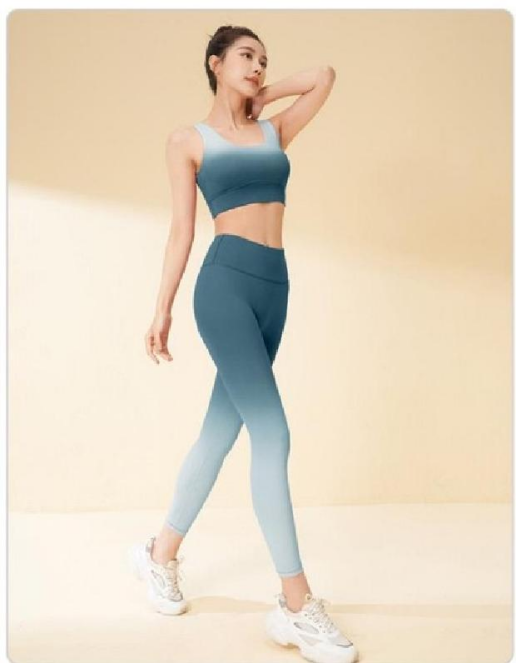
Studio communities favor subtle, close-range scents. A soft lavender or floral accord built into a yoga set stays personal — noticeable at arm's length, never filling the room. See the BlissVibe yoga set or the SkyTone ombre set.
Retail angle: ideal for studio-owned brands and membership programs — co-branded scents turn apparel into a loyalty product studios sell to their own members.
🏃 Outdoor Running & Cycling — the endurance segment
Long sessions, heavy sweat, no chance to re-apply anything. Scented garments keep working through the entire session — and, crucially, still smell fresh on the way home. See the AuraFlow tech tee.
Retail angle: endurance athletes are heavy repeat buyers of technical apparel; a durable scent claim (20+ washes) justifies a premium technical price point.
💼 Office & Commute — the everyday-basics extension
In air-conditioned, close-quarters environments a subtle fabric scent is more appropriate than a projected perfume trail. Scented base layers or a sport hijab work quietly under workwear.
Retail angle: positions scent as an everyday comfort feature — the bridge product that carries fragrance apparel beyond sport into lifestyle basics ranges.
✈️ Travel & Long Flights — the travel-retail channel
Liquids are restricted, cabins are dry, and 14 hours is far beyond any perfume's life. Scented travel clothing needs nothing in the toiletry bag — and still smells fresh after hours of sitting.
Retail angle: travel retail and duty-free buyers actively look for compact, story-driven products with a sensory hook. Gift-ready packaging plus a scent story fits that shelf perfectly.
🌙 Evening Events & Formal Occasions — where perfume keeps the crown
Formal occasions are built around the evaporative drama of a fine perfume: the opening burst, the drydown, the trail. That is what perfume is engineered for, and no fabric replicates the ritual.
Strategic note for brands: don't fight this segment — position scented apparel as the daytime/movement complement, and consider fragrance-brand collaborations to cover evenings.
🌍 Middle East & Gulf Markets — the KHALID signature line
Scent is part of hospitality culture across the Gulf. An oud-accord scented scarf carries the region's favorite fragrance families in wearable form — a category traditional perfume simply doesn't cover.
Retail angle: modest-sportswear demand is growing fast and oud is its natural scent signature; regional distributors get a category with almost no direct competition.
The Smart Play: Layer Both — and Sell the System
You don't have to choose between the two technologies — and neither do your customers. Position fragrance-infused activewear as the daily scent baseline (consistent, subtle, zero effort) and let perfume cover evenings and events. Because the fabric scent is linear and stable, it won't clash with a perfume's drydown; it fills the gap perfume leaves during movement and long days. For retailers, that means the scented line doesn't cannibalize fragrance sales — it extends the scent story into apparel margin.
Which Brands Should Add a Fragrance Line Now?
From our OEM floor, these buyer profiles get the fastest traction:
- Yoga & studio operators building member merchandising — a signature scent turns apparel into recurring loyalty revenue.
- Sport & athleisure brands needing genuine differentiation — "scent that survives 20+ washes" is a hard-to-copy feature in a price-war category.
- Modest-fashion & hijab distributors in the Middle East — scented scarves and sport hijabs with oud or floral accords meet a cultural fit no mainstream brand serves well.
- Travel-retail & gift distributors — compact, sensory, story-rich products with strong gift economics.
- Fragrance houses & perfume brands extending into lifestyle — apparel is the natural next touchpoint, with your own accord pre-embedded in the fabric.
The technology is production-ready today: MOQ from 300 pcs per color, custom scent development (floral, lavender, musk, herbal, citrus, oud or fully bespoke), Pantone color matching, and private labels. See our OEM/ODM service overview or request a sample program.
Frequently Asked Questions
Does fragrance-infused activewear replace perfume?
Not exactly — they complement each other. Activewear keeps a consistent, subtle scent on your clothing for up to 20 hours of wear and survives 20+ washes, while perfume delivers a stronger skin scent for special occasions. Many users layer both: activewear for movement and daily comfort, perfume for evenings and events.
How long does the scent last in scented activewear?
KHALID garments release fragrance for up to 20 hours of wear. The micro-capsules in the fabric survive more than 20 home washes, and the scent stays noticeable on most garments for months depending on care.
Is fragrance-infused clothing safe for sensitive skin?
Yes. The fragrance is embedded in the fabric fiber rather than sprayed onto skin, which reduces direct skin contact. Formulations follow international textile safety standards, and fragrance-free versions are available for sensitive markets.
Can I sweat while wearing scented activewear?
That's when it performs best. Body movement and moisture accelerate the release of the micro-encapsulated fragrance — the more you move, the more noticeable the fresh scent becomes.
What MOQ and customization options do you offer for brand programs?
MOQ starts from 300 pcs per color, with mixed styles and sizes accepted in one order. Customization covers private labels and hang tags, Pantone dye-to-match colors, custom packaging, and bespoke fragrance development — from ready accords (floral, lavender, musk, herbal, citrus, oud) to a signature scent developed exclusively for your brand.
How does the sampling and production process work for B2B buyers?
Typical program flow: inquiry → quotation → pre-production sample (3–7 days for stock fabric, 7–15 days for custom color or scent) → sample approval and 30% deposit → bulk production in 25–35 days → three-stage QC → worldwide shipment (FOB/CIF/DDP from Guangzhou). Sample fees are typically deducted from the bulk order invoice.