
The Rule Nobody Writes Down
Walk into any department store, brand boutique or chain retailer, pick up any garment, and smell it. You will notice one thing above all: nothing. Clean fabric, maybe the faint neutral scent of fresh packaging — but no chemical sharpness, no mustiness, no container funk.
Nobody trains customers to expect this, yet every customer notices its absence instantly. "It smells weird" is one of the fastest trust-killers in retail — a garment that smells chemical reads as cheap, unsafe, or old stock, regardless of how good the design is. That's why the rule exists on every buying office checklist, even when it never appears in a marketing deck.
Where Garment Odors Actually Come From
Odors on finished apparel are rarely mysterious. The usual suspects:
- Finishing residues. Anti-wrinkle and shape-retention finishes (formaldehyde-based systems in particular), softeners and other auxiliaries leave a chemical signature when they are under-washed or over-applied.
- Dyeing & printing remnants. Incomplete washing-off after dyeing or printing leaves solvent-like or ink-like notes that intensify inside sealed polybags.
- The container journey. Weeks at sea in sealed cartons and polybags, high humidity and heat — fabrics absorb the "container smell" that greets every importer opening a fresh carton.
- Warehouse time. Slow-moving stock sitting for months picks up storage mustiness that no ironing removes.
Every one of these is controllable at the factory — which is precisely why odor control is a manufacturing capability, not an accident.
What the Rule Costs When It Breaks
For brands and retailers, a missed odor issue is never just one garment:
- Failed intake inspections. Large buyers run sniff tests on incoming batches against reference scales; a failing batch means rejection, re-washing, or delayed launches — costs that land on the supplier's invoice.
- Silent returns. Customers rarely write "it smelled bad" as the return reason. They just return it. Odor is one of the classic hidden drivers behind apparel return rates that never show up properly in the data.
- Reputation asymmetry. A dress that fits well and smells chemical earns complaints; a dress that fits well and smells of nothing earns silence. Odor failures are remembered far longer than odor successes — because successes are invisible.
The Ceiling of "Smells Like Nothing"
Here is the strategic problem: odor-free is a pass/fail bar, not a differentiator. Every competent factory clears it. No customer ever chooses a brand because its clothes smelled of nothing. Once you clear the bar, scent stops being a variable you can compete on — you're back to competing on fabric, fit and price, like everyone else.
Unless you change what the rule means.
Flipping the Rule: From Odor Control to Scent Design
Micro-encapsulation scent technology does not mask odors — masking (spraying perfume over finished garments) fades in days and reads as a trick. Instead, a controlled skin-safe fragrance is embedded into the fiber during finishing, released gradually with movement, and engineered to survive 20+ home washes. The garment is still produced to the odor-free standard first; the signature scent is a designed layer on top of compliance, not a substitute for it.
On the shop floor, that flips every dynamic:
- The fitting room becomes a demo. The customer tries the garment on, moves, and the scent releases — a feature the sales associate can demonstrate, not just claim.
- Unboxing becomes a moment. E-commerce buyers open the polybag to a deliberate signature scent instead of flat neutrality — a small ritual that lifts perceived value and reduces "it felt cheap" returns.
- The claim becomes testable. "Scent that survives 20+ washes" is a concrete, verifiable promise — hang-tag copy that survives procurement scrutiny, not just marketing fluff.
- The brand gains a memory hook. Customers forget fabric weights; they remember how a garment smelled. Scent is the only merchandising variable that reaches customers before they look at the mirror.
What This Means for B2B Buyers
If you source apparel for a brand or retail chain, the practical read is simple:
- Keep the bar. Odor control stays a non-negotiable supplier requirement — put sniff-test acceptance into your QC terms.
- Add the layer. On top of that bar, a signature scent is one of the lowest-cost genuine differentiators available in activewear and everyday basics — embeddable from 300 pcs per color, with ready accords (floral, lavender, musk, herbal, citrus, oud) or a bespoke scent developed for your brand.
- Choose a factory that owns both ends. Odor control and scent embedding come from the same finishing capability. A manufacturer that documents both (see our OEM/ODM program and factory background) gives you one production line that clears the rule and monetizes it.
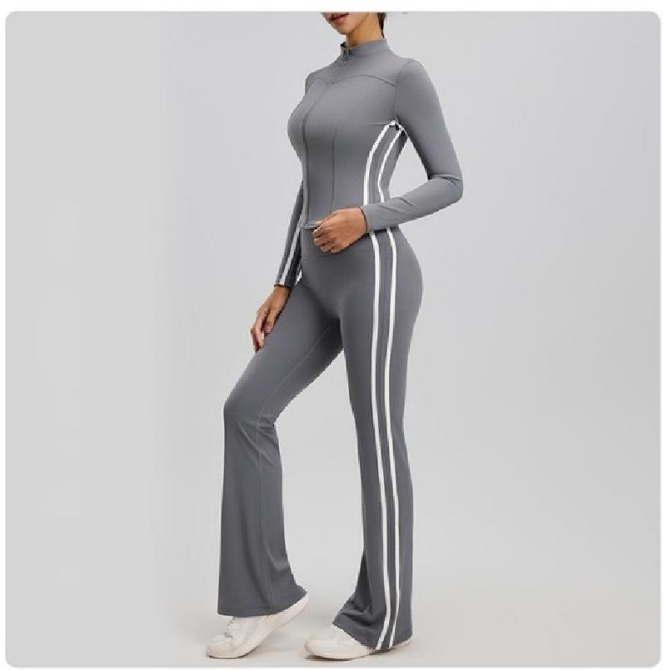
Curious what a scent layer looks like on real garments? Browse the KHALID collections — every piece is produced odor-free first, then carries its designed scent — or request a sample program to test the concept on your own brand.
Frequently Asked Questions
Why do new clothes sometimes smell chemical or musty?
Common sources are finishing-agent residues (such as formaldehyde-based anti-wrinkle treatments), dyeing and printing auxiliaries that were not fully washed off, long container transit in sealed polybags, and months of warehouse storage. All are controllable at the factory with proper washing-off, airing and QC.
Is a garment odor a real reason for retail returns?
Yes. Odor is one of the most common silent reasons for apparel returns: customers rarely cite "it smells bad" as the main reason, but a chemical or musty smell discovered in the fitting room or at unboxing often decides the return — and permanently shapes brand perception.
How do retailers check for garment odor?
Most large retailers and buying offices run a sniff test on incoming batches straight from the polybag, assessed against a reference scale; standard textile test methods also grade odor. Failing it can mean batch rejection or mandatory re-washing before delivery.
Does fragrance-infused fabric just mask bad odors?
No. Masking hides one smell under another and fades within days. Micro-encapsulation embeds a controlled, skin-safe fragrance into the fiber itself — released gradually with movement and surviving 20+ washes. The garment meets the odor-free standard first; the signature scent is a designed layer on top.
What does a signature scent mean for a retail brand commercially?
It converts an invisible quality requirement into a memorable feature: a distinctive unboxing moment, higher perceived value that supports premium pricing, stronger emotional attachment that reduces returns, and a multi-sensory story retail staff can actually demonstrate. Addable to existing programs from 300 pcs per color.